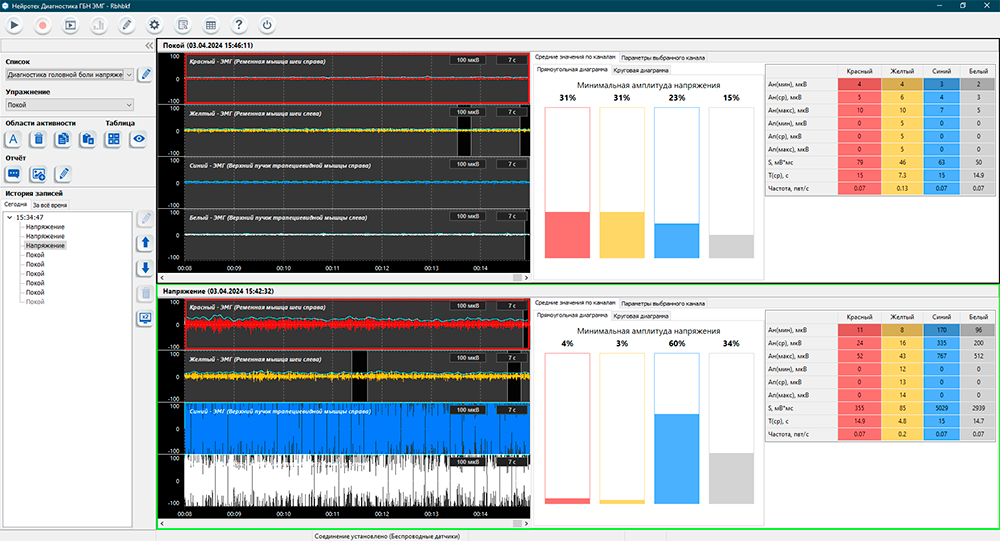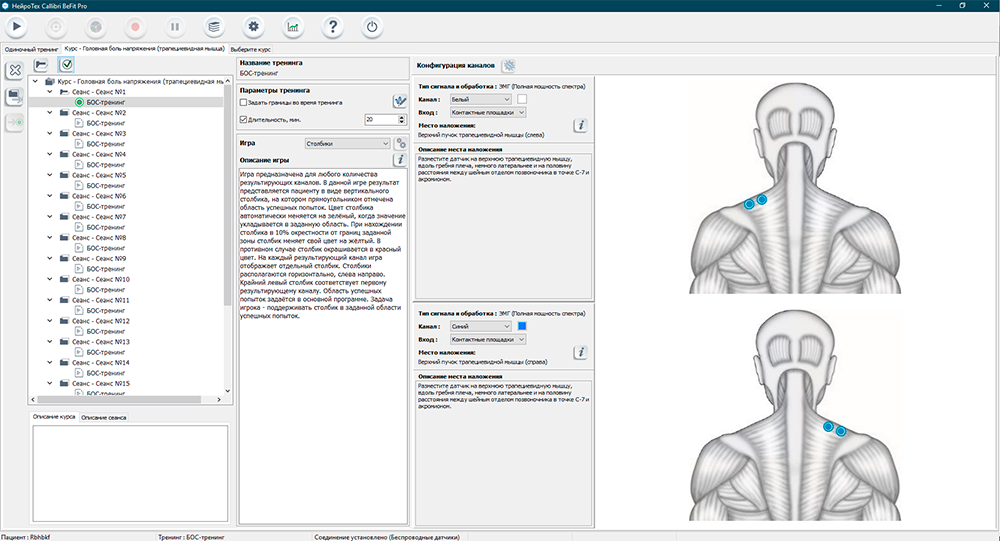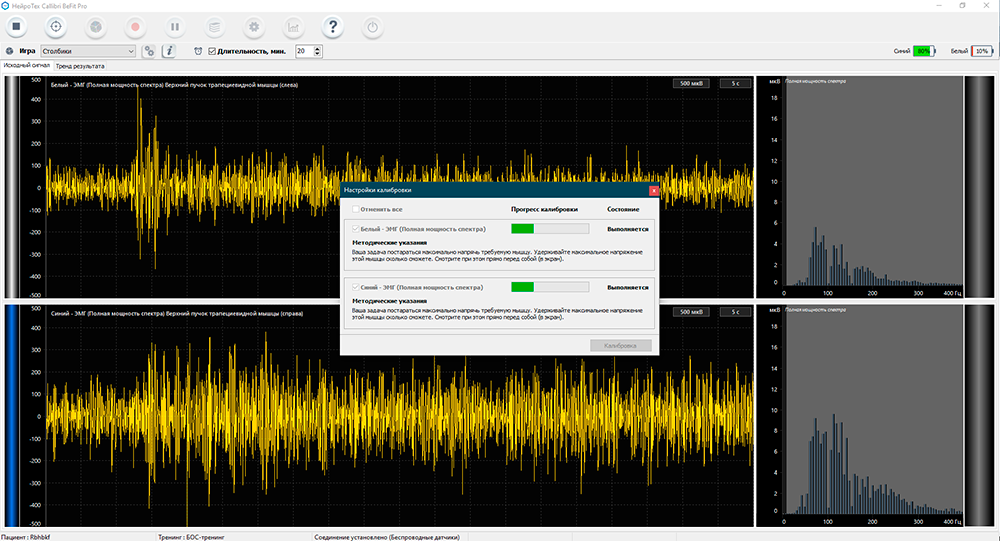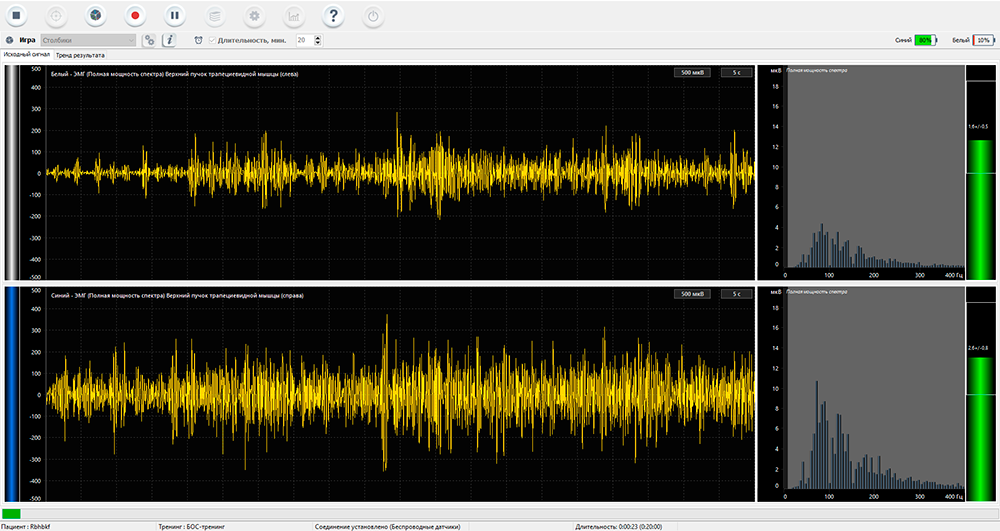
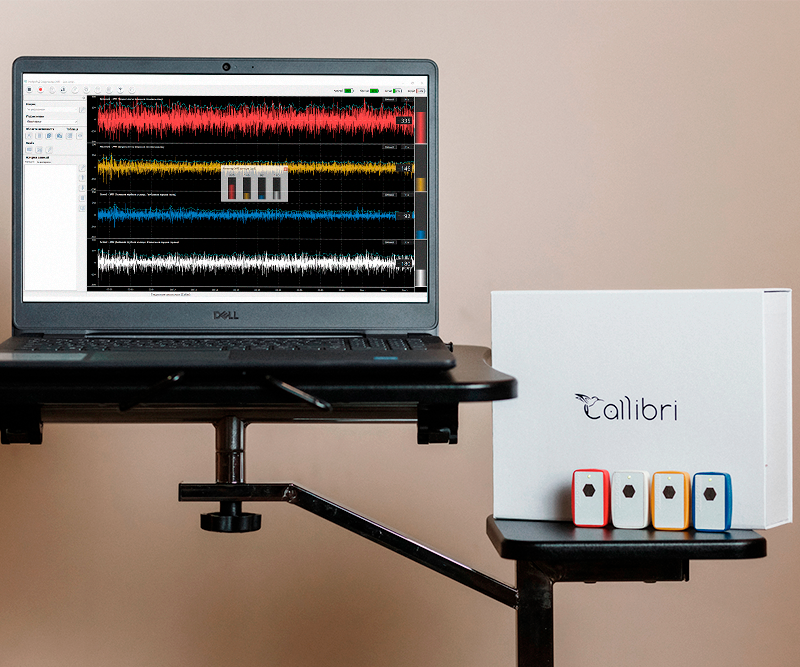
The system is designed to diagnose pericranial muscle tone disorders in tension-type headache (TTH) and to conduct muscle relaxation training using the biofeedback (BFB) method.
Instant analysis of the electromyogram reflects the objective functional state of the muscles being studied, allows for more accurate localization of foci of muscle disorders, and provides the opportunity to conduct biofeedback (BFB) training with tracking of the dynamics of recovery effectiveness.
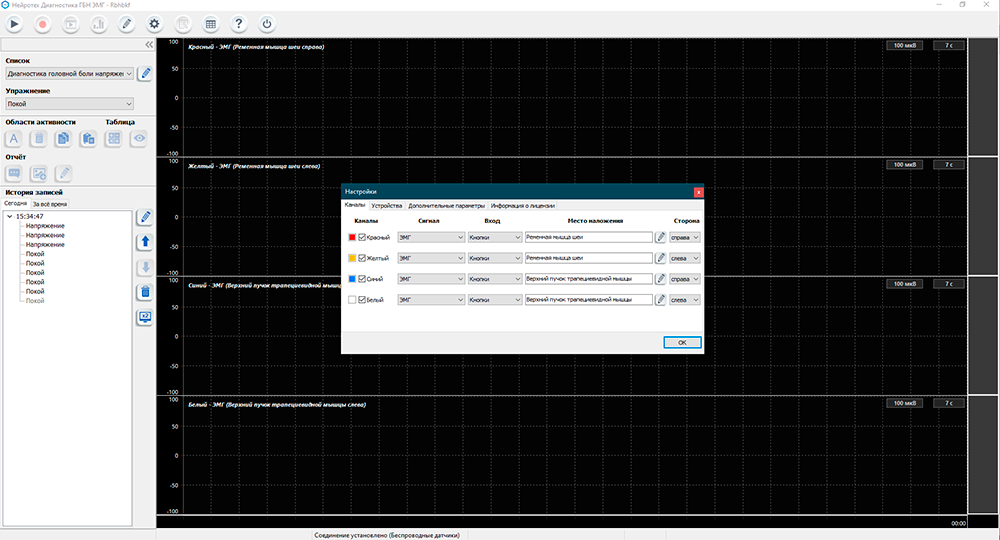
The complex provides for conducting trainings on the required number of custom configurable channels (within one training, one to four channels can be used simultaneously).
Based on myographic data, the functional capabilities of the patient's pericranial muscles under examination are instrumentally assessed before and after completing the rehabilitation course, which objectively assesses the effectiveness of the treatment methods used.
What is BFB?
The method of biofeedback (BFB) is a non-drug, highly effective method of restoring the functional state and regulation of various systems of the human body. This is a modern medical computer technology based on the method of adaptive feedback (biofeedback).
The main objective of biofeedback is to teach self-regulation and self-control skills (voluntary control of muscle tone).
Benefits of the BFB method:
- the method is physiological: it is based on the activation and mobilization of the human body’s reserves;
- long-term retention of self-regulation skills acquired during BFB training;
- individual approach to each training session;
- active involvement of the user in the rehabilitation process;
- method simplicity;
- non-invasiveness (the procedure is absolutely painless);
- no side effects;
- high level of user motivation;
- high and proven efficiency.
Purpose
Kolibri system for diagnostics and treatment of TTH is designed to diagnose disorders of pericranial muscle tone and localize the target muscle for the purpose of further BFB training aimed at muscle relaxation.
The system is suitable for equipping:
- pain management clinics;
- headache diagnostic and treatment centers;
- headache treatment rooms;
- regional pain relief centers;
- departments for the treatment of patients with chronic pain syndromes.
Kolibri system for the diagnostics and treatment of TTH enables to:
- rely on objective data on the functional state of the patient’s pericranial muscles throughout the entire rehabilitation process;
- conduct BFB training in order to teach the patient to relax muscles based on pre-set courses and trainings developed by practicing specialists in the field of headache treatment;
- painlessly visualize the current state of the pericranial muscles and the dynamics of their functional progress;
- instrumentally evaluate the effectiveness of the selected treatment method;
- increase the effectiveness of the rehabilitation process;
- motivate patients with objective successful results;
- improve the quality of patient care;
- reduce the time it takes to receive patients;
- increase the capacity of medical rooms;
- store data on training sessions and diagnostic results in a convenient electronic database;
- improve the image of a specialist and a clinic;
- localize target muscles.
System benefits
The uniqueness and benefits of the Kolibri system for the diagnostics and treatment of TTH:
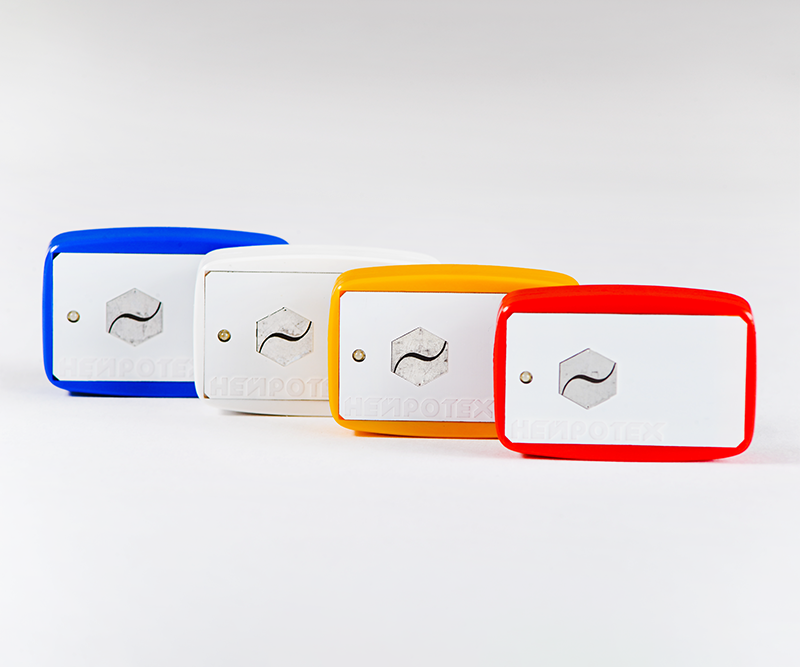
- the wireless nature of the design, miniature size and versatility of the Kolibri EMG sensors open up wide opportunities for individual optimization of the examination process;
- innovative approach;
- improving patient performance and motivation;
- correction of a proper technique for performing exercises;
- the system allows for systematic monitoring of the functional state of muscles;
- the ability to conduct training on the required number of channels (up to 4);
- preset sensor placement sites;
- channel-by-channel configuration and control of sensors: sensitivity and amplitude range settings for each channel are set via software;
- the received signal is transmitted to multifunctional and convenient software installed on a computer or laptop;
- the data obtained allow the specialist to objectively assess the patient’s current capabilities, select a treatment protocol based on individual characteristics, adjust the parameters of training with biofeedback, dose and control the load both during each session and throughout the entire course of treatment;
- the system enables to track the state and changes in physiological processes that are difficult to feel and control under normal conditions;
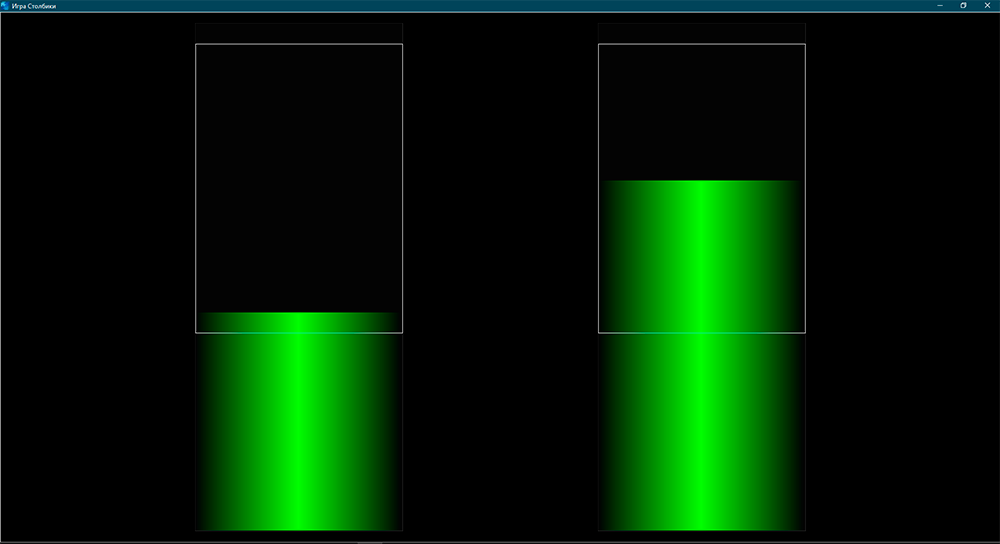
- for maximum rehabilitation effectiveness, game motivation technology is used. For the patient, the program transforms the recorded signals into a game. By controlling the target physiological parameters, the patient controls the game. Thus, the patient influences the correctness of training, learns to specifically control the target (trained) physiological parameters;
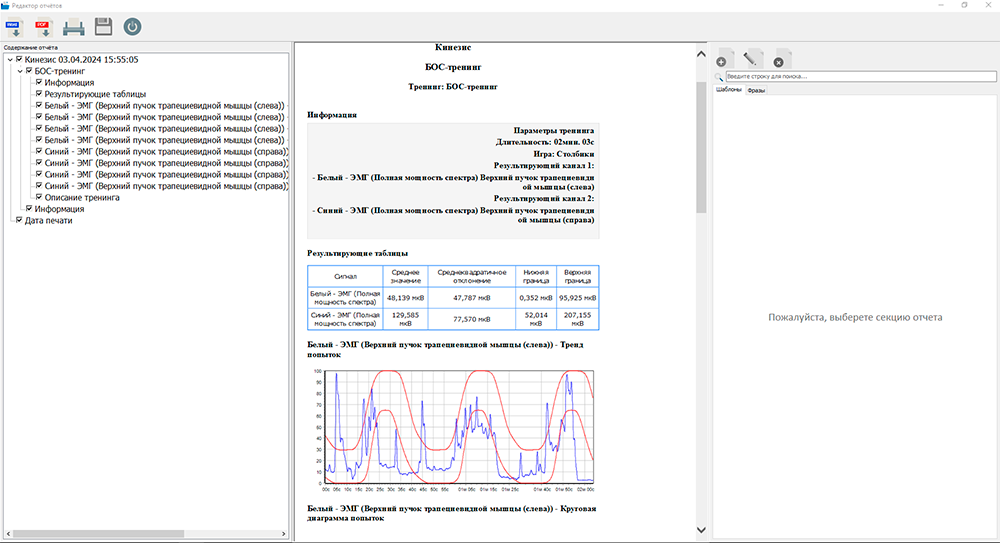
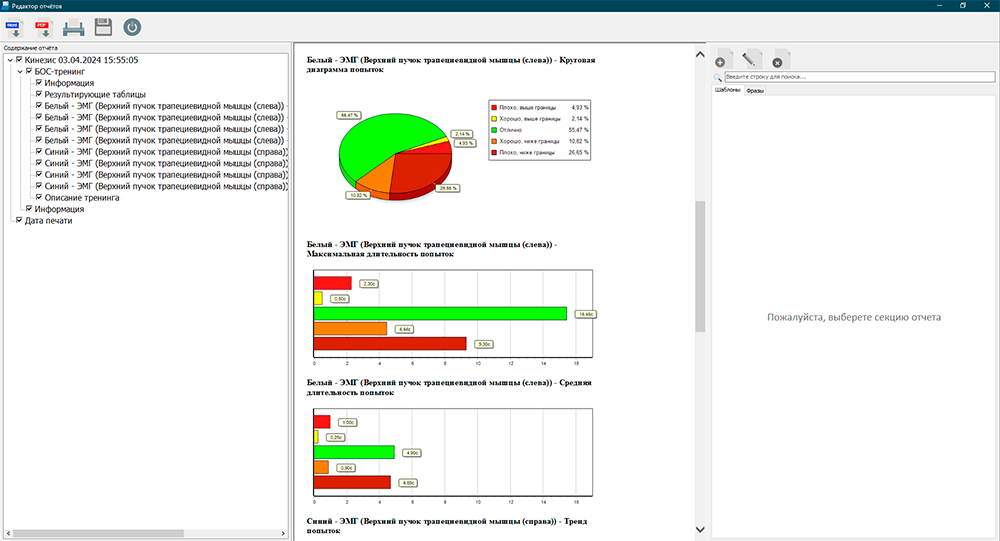
- after each training, a report is generated that clearly and objectively reflects the effectiveness of the work done;
- the presence of a pre-set course developed by practicing specialists. The structure of the courses is designed to gradually increase the complexity of tasks, which allows to gradually increase the result obtained.
System operation principle
1. Using ready-made protocols, a specialist conducts functional tests on diagnostic software and identifies target muscles based on data from the reporting form.
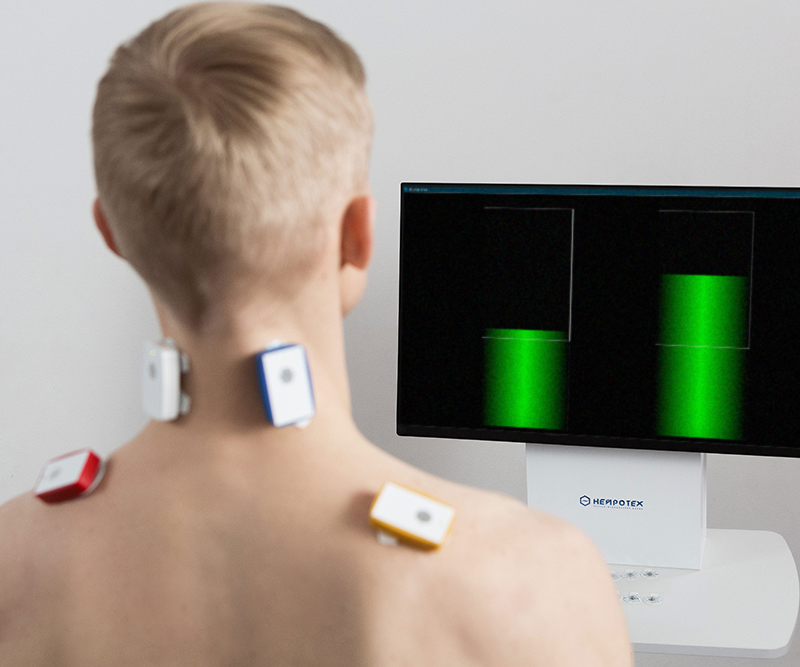
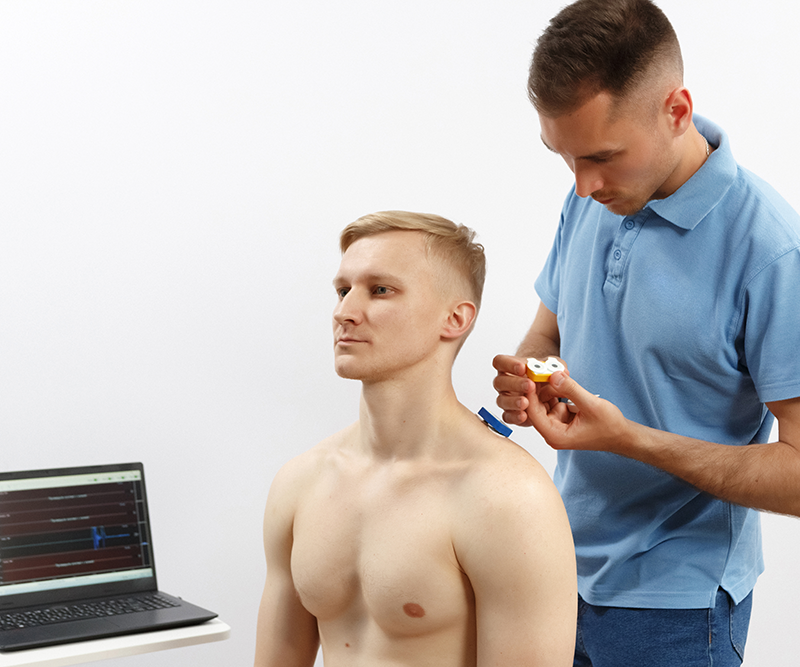
2. The specialist places sensors on the target muscles and on the muscles symmetrical to them (if the target muscle is the left chewing muscle, then we place the sensor on it and on the right chewing muscle) in order to conduct BFB training to relax the target muscle.
3. The specialist selects a pre-set course for conducting BFB training for a specific target muscle.
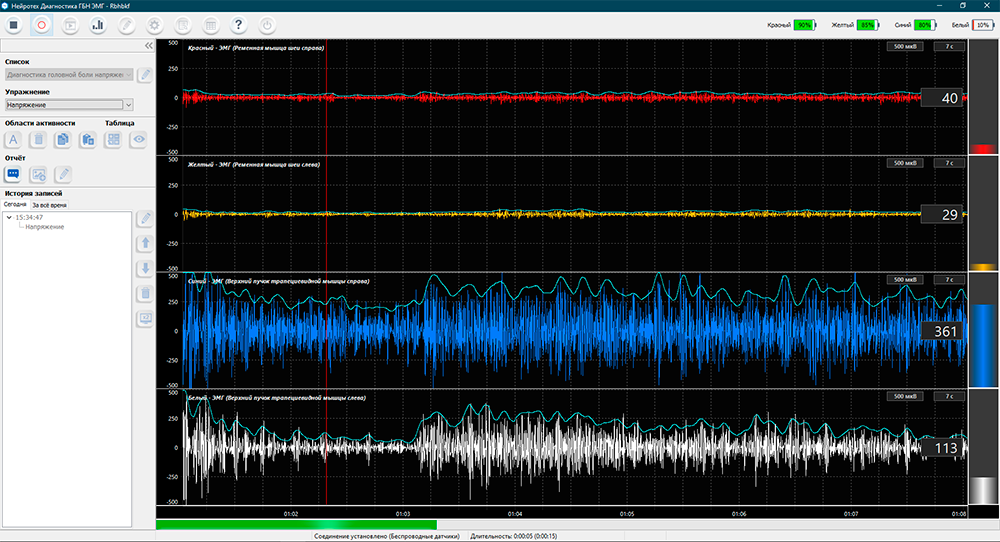
4. After the training starts, the sensors begin to record muscle activity (EMG signal) and transmit data (via Bluetooth protocol LE) into a program installed on a specialist’s computer or laptop.
5. Specialized software processes the received data and displays it as:
- initial signals – on the specialist's screen;
- game scenario – on an additional monitor for the patient.
6. The patient controls the game by tensing and relaxing a muscle.
Thus, the patient not only restores the functional state of the target muscle, but also activates the neural connection between the brain and the muscle.
7. After several sessions, the specialist conducts diagnostics again to monitor the dynamics of treatment.
Who can conduct BFB training sessions?
The Kolibri system for the diagnostics and treatment of TTH can be operated by:
- a neurologist;
- a traumatologist-orthopedist;
- a rehabilitation physician;
- a physical therapy instructor;
- mid-level medical personnel (nurse), acting in accordance with the instructions and recommendations of the attending physician (specialist).
For correct and effective work, it is enough to train the personnel in the basic functions of the complex software, basic features of the operation of the device itself and the principles of the BFB method.
System users have the opportunity to undergo training under the guidance of a practicing specialist.
System and software capabilities
Key software functions:
- the program allows to work in dual monitor mode: the software functions are automatically distributed between the specialist's monitor and the patient's monitor, which allows the latter not to be distracted from the game situation by physiological indicators necessary exclusively for the professional analysis;
- switching of signal display scales – by time (sweep) and amplitude (sensitivity) both in real time and after the examination;
- built-in algorithms for automatic detection of muscle activity areas, the ability to manually edit activity areas;
- extensive tools for visual comparison of two examination records within one screen;
- pre-set diagnostic protocols for conducting functional tests to determine and localize hypertonicity of a muscle group;
- the protocol editor enables to create and edit template scenarios for conducting examinations, create your own protocols and exercise lists with the ability to set the duration of their execution
built-in atlas of pericranial muscles simplifies the process of sensor application;
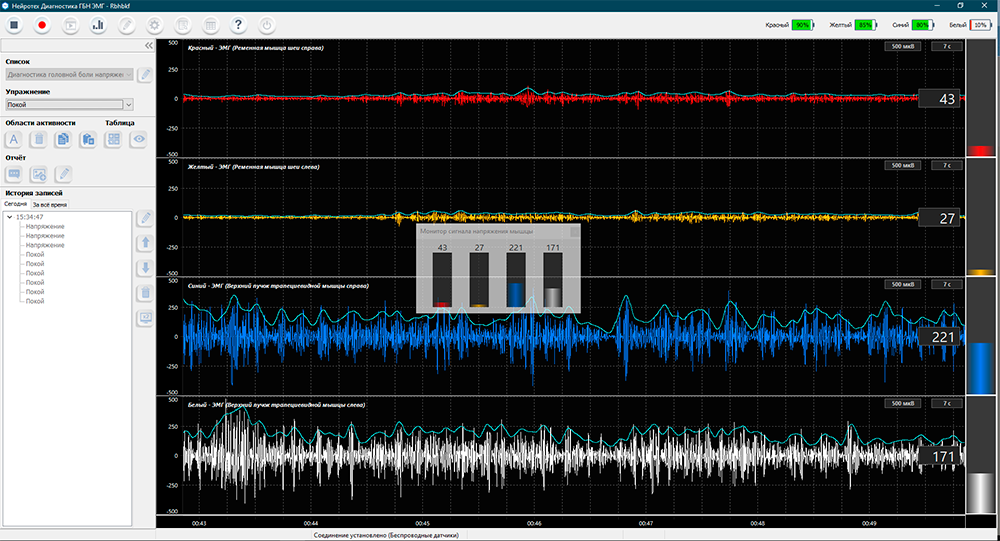
- signal monitor mode: an additional window containing a visual display of the percentage distribution of signal amplitudes by channels, thus enabling to quickly and effectively assess the efficiency of each muscle;
- the calculation of key resulting parameters of muscle activity: maximum and average amplitudes, average area value, duration of movements;
- construction of a comparative table based on the described parameters;
- construction of two resulting tables: a general one (displays average parameter values for all channels) and a separate table for the selected channel;
- the ability to customize the number of channels used in a training session (up to 4 simultaneously);
- the presence of a library of pre-installed courses and trainings developed by practicing specialists and intended for various rehabilitation purposes;
- development of your own unique methods (training courses) aimed at correcting the necessary parameters, with their subsequent saving in the user library;
- the ability to configure monitoring channels that are not involved in the game process (monitoring channels can be used during a motor exercise to control the tone of antagonist muscles);
- adaptation to a specific user taking into account individual characteristics (the presence of an expert adaptive system in the program for determining the patient’s capabilities before the start of training);
- allows to pause the gameplay (if necessary) during the training (pause mode in games);
- provides the ability to manually (directly during training) and automatically (contains a built-in editor for channel-by-channel creation of arbitrary laws) control the boundaries of the area of successful attempts;
- the ability to adjust the depth of feedback (sensitivity of the program's response time to changes in the physiological signal);
- allows to set the time for automatic completion of training (end of training timer);
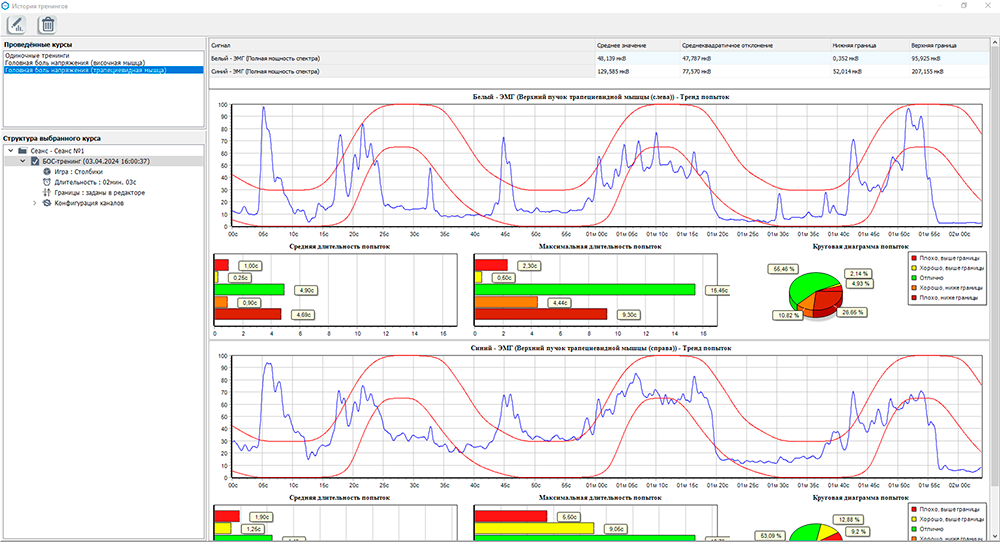
- during training, the program displays the initial physiological signal being recorded and the trend of attempts on the specialist’s screen;
- calculation of EMG signal spectrum in real time;
- generates an advanced report on each training session conducted;
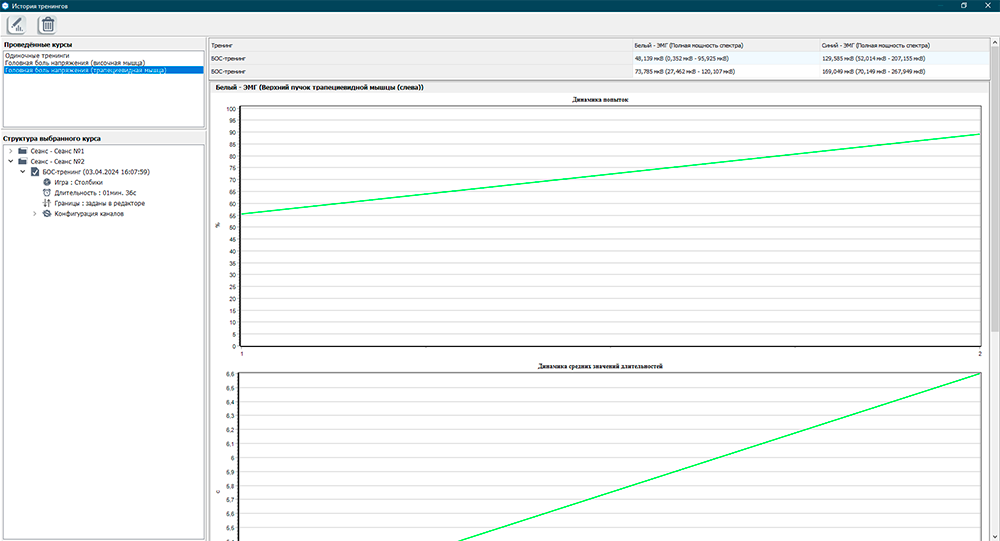
- visually displays the dynamics of indicators within the training course, which enables to evaluate the overall effectiveness of rehabilitation;
- checking the quality of contact between the electrodes and skin during training (indication of electrode detachment);
- contains a built-in database of standard templates and phrases for filling in the fields of the reporting form, with the opportunity to add, save, edit and delete your own templates and phrases.
Database functionality:
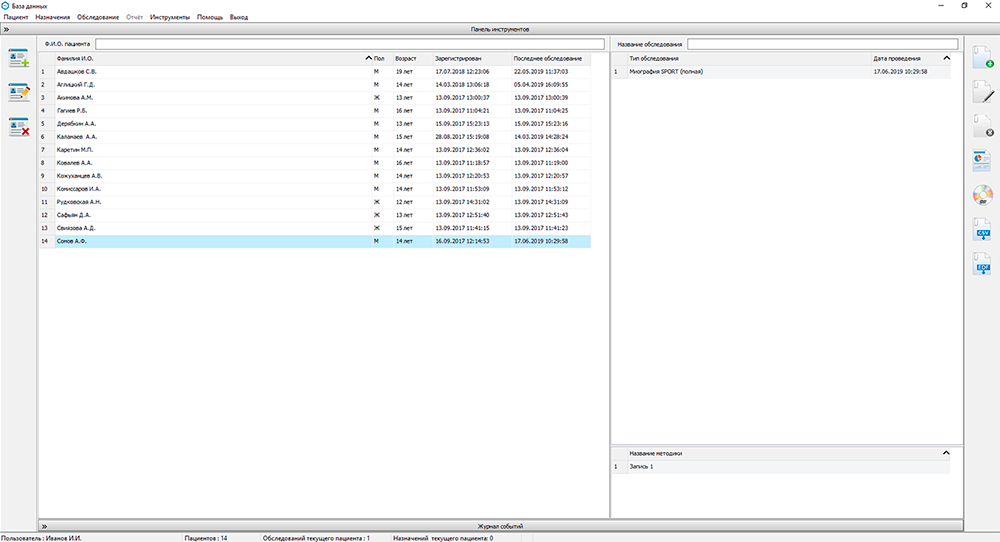
- the user-friendly and intuitive database interface allows to quickly fill in information about the patients during their registration in the electronic card file;
- mechanisms for sorting the patient list by criteria (alphabetical order, gender, age, registration date and last examination date) and quick search for a patient from the list by several letters of the full name;
- wide opportunities for remote and distant analysis of training results by specialists via cloud storage or network drive: completed training sessions are automatically uploaded to any convenient cloud service, which provides access to the results from anywhere in the world;
- the ability to export the reporting form to Microsoft Office Word and PDF;
- import/export of completed training sessions;
- high level of security for the data stored – encryption of results, backup and restoration of the database from a backup copy;
- the ability to create databases individually for each user (specialist).